Showing posts with label Epiphany. Show all posts

Sunday, January 4, 2026

Jan 4, 2026: Worship Second Sunday of Christmas: Come and See While We Move to Walk the Talk

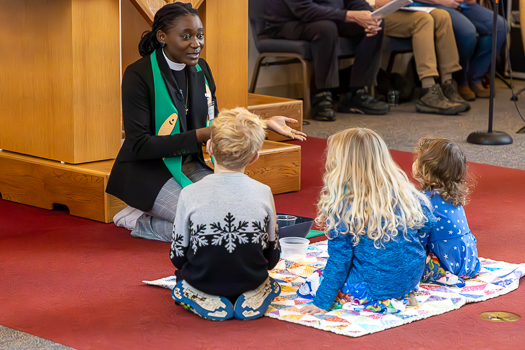
Today is the Second Sunday of Christmas and, as Pastor Steve pointed out, it is the Eleventh Day of Christmas. Also, Epiphany, on January 6, marks the beginning of a new season in the lectionary year. A star was added to the banner as our Epiphany reminder.  Bill Berry was accomplished, and he expertly provided the piano accompaniment for the congregation today.

Pastor Steve gave a persuasive plea through his sermon. He first pointed out how much we wish to dwell more on the Christmas story itself and learn more details about Jesus' early life. That is not what is found in the Book of John. After one of John's disciples exclaims, "Look, here is the Lamb of God," the man cannot answer Jesus' question about what he is looking for, but asks another question to Jesus, "Where are you staying?' The response is, "Come and see." And John's disciples immediately follow Jesus without recording any hesitation. 

As followers of Jesus, we are invited to do the same as we live our lives. Our faith that Jesus Christthe messiah, is now found and present in each of us, isn't the best testimony to offer, is to immediately walk our talk?

Service  After worship, Paul and Debi shared their learning from an Oregon Synod visit to Palestine and showed a powerful video, Munther Isaac's Sermon to the West, There was a discussion afterwards about our Lutheran Christian siblings in Palestine. This was another reminder of what is going on in Palestine following after the Wednesday Advent Sumud reflection in December. Isaac made a plea that any stance condoning any coercive power to influence people as part of God’s will must be tested at the cross.

Bethlehem Institute for Peace and Justice 

Wednesday Reflection on today's scripture 

Monday, March 3, 2025

March 2, 2025 -Transfiguration Sunday - Listen to Jesus, See His Face, then Go Down from the Mountain

What the Wednesday Bible Study and Pastor Emillie's sermon stressed was why we cannot "tabernacle' or stay where we momentarily encounter God or have a powerful spiritual encounter. The narrative lectionary reading makes this obvious. 

Peter, John and James may likely be seeing this as an end time experience since Elijah is there. They may not even know where they are in time but the next story of healing the boy would not have happened if they remained. Nor would the death that Jesus was foretelling would not have happened. 

The disciples would likely saw the Transfiguration as an end-times vision—perhaps a glimpse of the coming messianic kingdom. However, they misunderstood its full implications, particularly that Jesus' path to glory included the cross. 

Recently someone asked a class I am in how we felt about state-sanctioned violence being a part of God's plan. I can only speculate based on atonement theories I have seen offered. I find what works in my soul is to incorporate that suffering into the faith that all the experiences we can become part if the way we are drawn closer to God.

 I was also struck with verse Luke 9:31. During the Transfiguration, Moses and Elijah speak with Jesus about his upcoming "departure" in Jerusalem. The Greek word used here is "ἔξοδος" (exodos), which is the same word for "Exodus."

Luke’s use of "exodos" in the Transfiguration account is profound. It frames Jesus' journey to the cross as a new and greater Exodus, where he leads people to salvation, not from physical slavery, but from sin and death. This deepens the disciples' (and our) understanding of his mission as the fulfillment of God's redemptive plan

The whole passage demonstrates the move from the season of Epiphany, the reason to connect with everyday needs afterwards and starting the Lenten journey of turning to face the cross. 

Monday, February 24, 2025

February 23, 2025 - Seventh Sunday After Epiphany - See As God Sees

Each of the four Gospels has an account of Jesus being anointed . These are all done by a woman. Each have different circumstances with different outcomes.

Does the truth in one account's story lead us to doubt the truth of the others? Today's Gospel account is Luke's. Simon, a Pharisee. hosts a dinner for Jesus. His actions there are compared with another attendee, a woman in the city who is "a known sinner".

Jesus teaches Simon through a parable that the one to whom little is forgiven loves little. And we are so locked into our everyday transactional exchanges of life it is easy to compare and conclude that Jesus is advocating "bigger sins" will lead humankind to bigger forgiveness and, ultimately, to a larger love of God. Jesus, in truth, is calling for recognition of a need for forgiveness to fully embrace God's love and extend it to others.

The woman "sinner" actually shows her deep faith and humility, displaying profound respect and love in what she does. Jesus, wanting to teach Simon about devotion and respect, compares his actions to the woman's. on foot washing, a greeting kiss, and anointing Jesus with oil. Instead Simon subtly, and with cold formality, has distanced himself from Jesus and from his obligations as a host.

Rather than focusing on Jesus' forgiveness for the woman Pastor Emillie's sermon was all about the worship going on in the passage. This passionate worship on exhibit is also partially hidden. This passage is not told from the worshiping woman's perspective. Instead the narration is from Simon's eyes, and the lessons are taught, through him, by Jesus. 

He clearly is not perceiving what the woman is doing. From Simon's attitude it is implied that she is an uninvited attendee . She is too broken in Simon's judgment to belong there. Yet she is present and the worship she displays is intimate, personal and emotional.

Pastor Emillie recounted different worships she has experienced, from Congolese dancing and moving through their space with chairs on their heads to the Catholic chanting surrounded by incense and, at times, praying using the rosary. How Christians worship is diverse and shaped by the individuals who are gathered together.

At Creator the congregation formally worships Sunday mornings. Arguably we meet for worship on Wednesday afternoons as well for a Bible Study  What the upcoming narrative lectionary Gospel means to us is shared and we marvel at the understanding that is revealed rather than debating if any interpretation is more "right". When Pastor Emillie preaches her Sunday sermon it is always a thought-provoking different perspective from the Wednesday discussion.

And it is apparent how our faith saves us; and we go in peace both Wednesdays and Sundays.


Sunday, February 16, 2025

February 16, 2025 - Sixth Sunday After Epiphany - Blessed is Anyone Who Takes No Offense at Me

Today's narrative lectionary addresses the many commentators and political authorities dominating the current national dialogue. How does a world that takes offense at what others say or do?

In today's Gospel Jesus teaches, "And blessed is anyone who takes no offense at me.” At the end of the passage he observes:

"To what, then, will I compare the people of this generation, and what are they like? They are like children sitting in the marketplace and calling to one another,

‘We played the flute for you, and you did not dance; we wailed, and you did not weep.’

“For John the Baptist has come eating no bread and drinking no wine, and you say, ‘He has a demon’; the Son of Man has come eating and drinking, and you say, ‘Look, a glutton and a drunkard, a friend of tax collectors and sinners!’ 

 Nevertheless, wisdom is vindicated by all her children.” 

The phrase “wisdom is vindicated by all her children” means that true wisdom is ultimately proven right by the results it produces. In other words, God’s wisdom—expressed through John’s call to repentance and Jesus’ ministry of salvation—will be shown to be true by those who accept and follow it.. Wisdom here refers to God's divine wisdom for the salvation of humankind, Vindicated means that wisdom will be justified or proven right. And wisdom's children are those who follow God’s wisdom—those who accept John’s message of repentance and Jesus’ message of salvation.

Jesus was saying that, despite the criticisms and rejections, those who truly embrace God’s wisdom will prove its truth by their transformed lives. True wisdom is not determined by public opinion but by the fruit it produces in those who follow it.

We are hearing Dietrich Bonhoeffer quoted in the national news this week. He wrote "Against stupidity we are defenseless" in a letter from prison, which later became part of his work Letters and Papers from Prison. Specifically, this idea is found in an essay he wrote while imprisoned by the Nazis in 1943-1945.

In this essay, Bonhoeffer reflects on how stupidity is a greater danger to society than outright evil because it is resistant to reason and cannot be overcome by logical argument. He argues that stupidity is not merely an intellectual deficiency but a moral and social issue—people become stupid when they surrender their independence of thought to a dominant ideology or leader. The American president is now floating the idea of making Gaza the "Riviera of the Mediterranean" through a plan of gentrification.  Many commentators and political authorities are treating this as a possible solution to the ongoing crisis.

Pastor Emillie addressed the problem of offense in another way. She had the congregation focus on the good things being done and happening at Creator rather than fixating on offense. In the Gospel of Luke, the Greek word translated as "offense" is often σκάνδαλον (skandalon) or related forms like σκανδαλίζω (skandalizō). This word carries a deeper meaning than just being offended in the modern sense—it refers to something that causes someone to stumble, fall into sin, or be led astray.  Jesus is saying that those who do not stumble over His identity or mission are truly blessed. Some people found Jesus' teachings and actions difficult to accept, but true faith does not fall as a result.

An example might be included in this Gospel passage.Some might stumble on Jesus saying "Among those born of women there is no one greater than John" while they recognize that Jesus was born of woman. 

Yet quoting from Paul's letter to the Corinthians on wisdom and foolishness:

**"For the word of the cross is folly to those who are perishing, but to us who are being saved it is the power of God. For it is written, ‘I will destroy the wisdom of the wise, and the discernment of the discerning I will thwart.’

Where is the one who is wise? Where is the scribe? Where is the debater of this age? Has not God made foolish the wisdom of the world?

For since, in the wisdom of God, the world did not know God through wisdom, it pleased God through the folly of what we preach to save those who believe.

For Jews demand signs and Greeks seek wisdom, but we preach Christ crucified, a stumbling block to Jews and folly to Gentiles, but to those who are called, both Jews and Greeks, Christ the power of God and the wisdom of God.         1 Corinthians 1:18-25  

Tuesday, February 11, 2025

February 9, 2025 - Fifth Sunday After Epiphany - The Centurion and the Widow

Last Sunday Creator moved to the Narrative Lectionary instead of the Revised Standard Lectionary readings. This was a move Pastor Ray planned to make for Creator and was decidimg on the right time to do it at the time he passed. During this trial period we will engage with the Narrative Lectionary reading and Psalm reading as opposed to reading three or four Bible passages in the service. The announcement went out this week.

There are two stories given in the Narrative Gospel. The first account is related to a Roman centurion in Capernaum who seeks Jesus' help to heal his slave. In her sermon Pastor Emillie highlighted similarities these stories shared, namely concerns about authority and that both the centurion and Jesus act from compassion  The centurion shows his compassion to his slave and the Jewish community as they say he built their synagogue. His response to Jesus when the centurion knows Jesus is on his way to his house reveals a remarkable understanding of authority and faith, which leads Jesus to praise him as having greater faith than anyone in Israel.

Pastor Emillie pointed out that this doesn't fit our modern assumption of what a Roman would do as an oppressor. The centurion is a Gentile, yet he displays greater faith than the Jewish people around Jesus. This anticipates the inclusion of Gentiles in God’s kingdom, a major theme in the New Testament. There is a foreshadowing of the centurion who recognizes Jesus' authority at the cross. 

As far as the second story Jesus’ response to this widow’s suffering is not abstract or intellectual; he feels her despair on a visceral level (in fact, the Greek word usually translated “compassion,” splagchnizomai, comes from splagchna, which means “intestines”). She does not ask for a miracle. A deep, gut-wrenching compassion leads Jesus to act on her behalf. We see this pattern elsewhere in Luke, as well.

This is the first of three instances of the actual word “compassion” in Luke (Luke 7:13; 10:33; 15:20). All three depict one person first experiencing another person’s suffering and then acting on that person’s behalf. Here, Jesus raises the widow’s son (Luke 7:13); in the Parable of the Good Samaritan, the Samaritan cares for a robbed and injured man (Luke 10:33); and in the Parable of the Prodigal Son, the father feels compassion for his wayward son and rushes out to welcome him home (Luke 15:20). Pastor Emillie called the parable as a reference point as well.

Catholic priest and spiritual writer Henri Nouwen describes Jesus’ life of compassion as the “path of downward mobility" — Jesus chooses pain, rejection, persecution, and death rather than the path of “upward mobility” toward power, authority, influence, and wealth. Jesus did not reach down and lift the poor up from above. He became poor — he suffered with — and according to Luke, Jesus’ crucifixion and resurrection are precisely what enables redemption — indeed, relief from suffering — for all humanity. This is a message that we can heed now as our country is being tempted to not be compassionate.

Pastor Emillie underscored the temptation our nation is being put through by quoting the right Bishop Mariann Budde's sermon at the Washington National Cathedral prayer service a couple of weeks back where the Episcopalean bishop addressed the new president directly. She reminded him that mercy (which springs from compassion) is an essential quality of leadership. She asked him to be merciful on the fearful, the poor, and the marginalized. She was criticized by many for not citing a Bible passage in this reminder.

Everything that Bible readings convey, whether they are the Narrative or Revised Lectionary readings, are meaningful to what America is going through right now.

Sunday, February 2, 2025

February 2, 2025 = Fourth Sunday After Epiphany - Reshaping Sabbath Observance and Common Sense

Remember the Sabbath day by keeping it holy.  Exodus 20:8

One Sabbath Jesus was going through the grainfields, and his disciples began to pick some heads of grain, rub them in their hands and eat the kernels. Some of the Pharisees asked, “Why are you doing what is unlawful on the Sabbath?”  Luke 6:1-2

Today we celebrated Boy Scout Sunday. Troop representatives introduced themselves, participated and worshiped with us. This service also marked the first time Rosie volunteered to be Assisting Minister and she brought a fine reverence to the role. 

Pastor Emillie preached in her sermon how much she is struck by the Pharisees' concerns in the Bible accounts being so similar to the concerns we have today. For example given this Gospel text; what is the best way to remember Sabbath and keep it holy?

The Torah 's prescribed punishment for breaking Sabbath was death, usually by stoning. In contrast, by Jesus' time, executions for Sabbath violations were rare. Instead, religious authorities probably imposed social ostracism, exclusion from the synagogue, or other disciplinary measures. Now anybody would be hard pressed to find any agreement on a proper way to observe Sabbath

Changes in Sabbath observance are obviously documented in the Bible  The consequences of Sabbath violations in the New Testament became equivalent to breaking social norms today, or what might be called common sense. Common sense has been on my mind since last week, when the U.S. President proclaimed at his inauguration this is a time to return to a "revolution of common sense".

This week after the plane-helicopter crash in Washington this president appeared at a press conference. He first performed his traditional presidential duty as consoler-in-chief during a time of tragedy. He observed the country was in mourning, shared his condolences during "an hour of anguish", and paid tribute to first responders and the victims.

Then he sharply pivoted - providing yet another reminder of how his new presidency is going to be very different. It will be combative. It will be unscripted. And it will be quick to point the finger of blame intoning."We do not know what led to this crash, but we have some very strong opinions and ideas." He speculated, without giving evidence, that a lowered standard of hiring for air traffic controllers in the Federal Aviation Administration during the Joe Biden and Barack Obama presidencies may have factored in the disaster, namely Diversity, Equity and Inclusion policies. Asked how he could blame diversity programs for the crash when the investigation had only just begun, the president coldly responded: "Because I have common sense.

This disrespects everyone questioning that assumption and his reasoning. This compromises the value of the NTSB investigation and their future, eventual recommendations. Leaping to conclusions and giving the reason as "common sense" is wrong on many levels.    

At our Wednesday discussion of this Gospel reading Pastor Emillie talked about the difference between what she now sees here on a Sunday and when she went to Minnesota, where all the businesses close on Sunday. I remember when the routine that she saw was the more or less common practice when I was young. Many found that particular practice meaningful then but obviously that lost value over time.

What Jesus taught and did in his life can be a guiding light for the next way to remember God's commandment. Jesus said The Son of Man is Lord of the Sabbath.” The Sabbath is made for man. We remember at Easter that Jesus' resurrection happened on a Sunday.The word Eucharist comes from the Greek word εὐχαριστία (eucharistia), which means "thanksgiving" or "gratitude." Creator remembers Jesus through Communion every week. When I was young this happened in the worship service once a month. I usually write blog entries and reflect on our worship experiences.

Remembering the Sabbath day and keeping it holy will remain our ongoing work-in-progress.

Tuesday, January 28, 2025

January 26, 2025 - Third Sunday after Epiphany - Proclamation for the Poor, Captives, and Oppressed

 Last Sunday's worship was inspiring and illuminating.

There was a Children's Message about the Feeding of the 5,000 where the congregation joyfully sang, pantomimed and danced with the children before the pastor's presentation. Pastor Emillie then proceeded to show with cotton balls how more appeared to be able to fit into a tight container. So God can provide more than what we may imagine or possibly expect. 

The readings were prescient. This week the Gospel was the account of Jesus' Isaiah reading in the synagogue at Nazareth beginning his ministry. They were significant to today and the week's events as detailed in the last blog entry. Pastor Emillie wove into her sermon the Second Reading: 1 Corinthians 12:12-31 that we "are the body of Christ and individually members of it". 

Her sermon was moving. At times people may disagree on why they attend church. Some may favor the pastoral focus of faith. They prefer Sunday to be a sanctuary where relationship, community and nurturing are emphasized over the confrontation they face in life. Others prefer the prophetic voice of the church. They want to draw God's will to be done on earth like it is in heaven. They desire Christianity be challenging to the status quo. And, of course, many others fall at various points along that spectrum. This was made dramatically clear in reactions to Bishop Budde's sermon last Tuesday.

Pastor Emillie tied the church's pastoral and prophetic roles together with past histories and the present. She reflected on Dietrich Bonhoeffer, a German pastor with a prophetic voice who stood up against the Nazi government during World War 2 and was ultimately executed. She brought up Harriet Tubman as a caring individual who escaped slavery and became the conductor of the Underground Railroad. She helped hundreds of enslaved people reach freedom.

Finally she testified after reading the latest headlines coming from her Congolese hometown of Goma which is experiencing significant turmoil this last weekend due to the M23 rebel group's offensive in the eastern region. The rebels, reportedly backed by Rwanda, have seized control of the city, a strategic city and regional hub. This escalation has led to widespread violence, including reports of rapes, looting, and overwhelmed hospitals struggling to treat hundreds of wounded individuals.

Her family fled Goma to settle as refugees in Uganda  Her thoughts went to the people who continued to search for a place to call home as they reside there. This is where she preached the Corinthians reading, stressing how important it was to remember we are all one body. As long as there is injustice occurring anywhere we are called to do what we can. The Prayers of the People underscored the importance and brought the desire for transformative justice and peace to God in prayer.  

The Communion and the music in the service functioned as a continuation of the prayer.. Christ, Be Our Light became a quiet, humble plea for, and faith in, God's grace as our Hymn of the Day . As we took Communion One Bread, One Body captured the reverence and aspirations so many of us were feeling when we approached the altar for today's foretaste of the feast to come.

Worship can express what we are grateful to receive. Not just the epiphanies, but for the many moments we experience together as a community that make us more aware of what can be changed in life. 

Tuesday, January 21, 2025

January 26, 2025 - RIC Sunday - Confronting the Fierce Urgency of Now

We are now faced with the fact that tomorrow is today. We are confronted with the fierce urgency of now. In this unfolding conundrum of life and history, there "is" such a thing as being too late. This is no time for apathy or complacency. This is a time for vigorous and positive action.”

Martin Luther King Jr. August 28, 1963 for the Washington for Jobs and Freedom March  (The "I have a dream" speech) 

This Sunday 2025's RIC Sunday (Reconciling in Christ) is observed. 

Creator has observed 15 Reconciling In Christ Sundays since becoming certified as an RIC congregation on Sunday. April 5, 2009. Last Monday.Martin Luther King Jr.'s birthday was observed and Donald Trump was inaugurated. I add two more RIC Sundays including January 28, 2007, the first year I attended an RIC Sunday service.

The nation, the ELCA (and the Oregon Synod specifically), the Portland metro area, not to mention Creator have all changed significantly since 2007.  Today, looking backward and looking forward, fills me with hope and a reaffirmed direction. Today there are strong and ongoing attempts to embrace America's past and push the country forward into "greatness". According to the newly inaugurated president, this is a time to return to a "revolution of common sense". Instead I will reflect on the past and the future with what my five senses now tell me with many of newly-experienced epiphanies.

In 2007 Mary and I hesitantly gathered with strangers for what felt like a controversial RIC worship. Our "common sense" then felt bleak and discouraging. There seemed little chance for an ELCA policy change to either recognize gay marriages or ordain gay clergy. Yet, in the coming years with others, we listened, learned, and finally acted to encourage or change Creator minds and hearts. As a result Creator became an RIC congregation months before the ELCA policy change in 2009.

I am grateful to worship with this community that is embarked on a holy journey. A significant part of that journey are our reflections on Sunday lectionary readings. This year the lectionary readings match the RIC Sunday, 2016  readings. That day one single word Jesus proclaimed, namely "today" shattered my conceptions of Christianity's role in my life and how I viewed Jesus' ministry from that day to this. 

Today this scripture has been fulfilled in your hearing. It is a rare thing when a bible story is quite so vivid and applicable to current news headlines On Tuesday this week, Bishop Mariann Budde gave a sermon at the Washington National Cathedral prayer service. She addressed the new president directly. She reminded him that mercy is a quality of leadership. She asked him to be merciful on the fearful, the poor, and the marginalized.

What happened next was predictable. Many on cable, social media, and the new president himself complained. A Southern Baptist pastor wrote a piece to urge Trump to seize the Washington National Cathedral from the Episcopal Church and give it to a conservative denomination to run as a national church. Another pastor similarly wrote for another conservative Christian website that “Congress should revoke the charter” from the cathedral. He also pointed to the cathedral’s decision to remove honors to Confederate generals as another reason why Congress should target the cathedral.

For those sympathetic to Christian nationalism this is an affront. On Thursday, twenty-one members of Congress filed House Resolution 59 to publicly condemn the bishop and denounce her “distorted message.”  They heard what she spoke as political activism and they claimed was not biblical. With no hint of humility, many wanted to throw Bishop Budde off a proverbial cliff given what they heard her preach. They claim calls for mercy are not biblical.

And that becomes 2025's sad epiphany for me. These Luke 4 verses have inspired other personal and powerful epiphanies. In 2019 I found my initial MLK quote on August 25. I also quote from that day, "Isaiah's words, read by Jesus, challenged common sense and left me, for one, as aghast as those in Jesus' Nazarene synagogue. Jesus' call for me to not be apathetic or complacent

The Isaiah text Jesus quoted from may be understood by some as a one time prophecy. It may also defy common sense. Every year cannot be the year of the Lord's favor. Nor should this year be the Lord's "favored year". I wrote then about how this challenge to common sense, "There is still social inequity, captives, blindness and oppression that appears to be increasing. Does the Lord really favor this year? This year?  Come on, God's will being done on earth as it is in heaven hasn't happened yet, right? The year when that is fulfilled will be the year of the Lord's favor. 

Yet in another sense, every year can be the year of the Lord's favor and today I hear this as Jesus' call to recognize all the current opportunities for each of us to embody what is the best in us and act from the fierce urgency of now. 

Sunday, January 19, 2025

January 19, 2025 - Second Sunday after Epiphany - A Cup of Water Compared to the Ocean

This week's Gospel describes the "miracle" at the wedding at Cana of Galilee. Pastor Emillie's sermon preached on, and found inspiration in, the faith that led to Mary come to Jesus rather than anyone in charge of the wedding to inform him that the wine has run out. And, after she hears his response, to say to the servants at the wedding, Do whatever he tells you.

Jesus' initial  response would appear to have shown an indifference to or, perhaps, a potential disagreement on whether to act on what she was implicitly asking to be done. And so this became an example of taking everything to God in prayer, no matter how trivial it might initially appear.

Mary shows a trust and confidence that Jesus will always do what is right and what is possible for him to do. When something is brought to God, whatever happens will be in accordance to God's will. Even when the journey to the Promised Land should actually have taken a shorter amount of time, the forty years of wandering is what God willed. This requires a belief that God will not simply say no to a prayer, but whatever happens is the response God intends to give.  This also requires patience to understand that response. A cup of water, added or taken away when compared to the ocean, will not have an immediate or noticeable effect

I see the beauty of perceiving Mary's faith this way and there other meaningful ways to interpret the wedding at Cana. This account, unique to the book of John, never calls the water turning into wine a "miracle". Rather it is the first of Jesus’ seven "signs" that reveal Jesus' glory. True, water turning into wine is something extraordinary, but the "signs" point to a truer revelation about Jesus. Revelation for revelation’s sake is not the point but what deeper reality is revealed? What are we supposed to "see"?

Particular details as provided in John Chapter 2 are initially hard to understand. They are presented the way Jesus' conversations with Nicodemus or the woman at the well are told. Jesus and his mother barely respond to each other. Actually this exchange between them is really quite funny and we do ourselves no favors when thinking the Bible is devoid of humor. 

At first she notes that they have run out of wine. Jesus’ response is, basically, on its face, that they should have hired a better wedding planner when he responds with Woman, what concern is that to me and to you? My hour has not yet come." Not answering him directly, she says to the servants at the wedding, Do whatever he tells you.

Here the mother of Jesus is like a mother of a schoolboy, encouraging her child to get on the school bus for the first time: “Come on, you can do it! I know you can!” The Chosen episode that dramatizes this wedding by providing a narrative soliloquy on the importance the first moment of a ministry can be.

Jesus addresses his mother as woman. This may be a formal or culturally appropriate way to address her for the time period. Maybe this is included to indicate a shift in their relationship. It also hints that this is not a simple report of what happened. While Jesus addresses her, she chooses to speak to the servants.  Again, a possible clue something more is being revealed here.  Another beautiful explanation is that she is showing her faith in Jesus to do what is right and possible for him like Pastor Emillie preached. "The Wedding Gift" episode of The Chosen highlights this aspect of her faith as well.

So this is the first of John's seven "signs". The "mother" (she is never called by her name in John) thinks this is this is the time for the messianic feast. Jesus says no, "my hour has not yet come". This is not to be the messianic feast. That will come with Jesus' death and resurrection. This "sign" foreshadows what will eventually be his hour. A foreshadowing of Jesus' crucifixion opens this story.  This "sign" occurs on the third day of the wedding. And the mother of Jesus is referenced only twice in the John's gospel, at the wedding at Cana and at the foot of the cross.

It is so poignant that the mother of Jesus brackets his earthly ministry in John's Gospel. She is present at the beginning of his career and she is there as she watches him die. She is the nurturing force when he is the Word made flesh, a shared parenthood with God, the father. This can be a reminder that whenever Jesus reveals his divinity, something about his humanity is simultaneously revealed. Perhaps, in this sign of turning water into wine, we might want to use it to experience something that we need to know about ourselves.

Six stone water jars for the Jewish rites of purification are filled with the water that will become wine. There is far more than what would be needed to satisfy the thirst of wedding guests. This shows not only that God provides in abundance but suggests the purification purpose of the jars is important and relevant. 

On deeper examination more than one miracle takes place as this transformation occurs.. Jesus, revealing his glory, is instantly fulfilling a role of host rather than a guest. The wedding steward assumes that the old bridegroom is still the host when making the observation "Everyone serves the good wine first and then the inferior wine after the guests have become drunk. But you have kept the good wine until now.” We know this assumption is not the case.

Note that this account does not mention anything about the bride or the ceremony itself. This leaves the wedding open to standing for something more - the union of daily, routine aspects of life with a higher calling we have as humans. This union is producing a born again man .The wedding celebrates this as a time of joy and abundance.

When read like this other details here fall into place. "My time has not yet come," implies the importance of timing and readiness in undertaking great spiritual work. Transformation occurs when conditions are right—when the individual is prepared and receptive to a higher call. Jesus calling his mother woman also fits. She, the servants, and the water stand for the ordinary, mechanical aspects of life and human nature. The wine then shows everyone working to achieve this higher call of  bringing God's kin-dom to earth.

Wine is associated with joy and festivity. After this miracle, when Jesus acts as the new bridegroom and host of the wedding. Both spiritual teachings and psychological development become interconnected.

Dwelling with the fortuitous incidentals John brings into this wedding at Cana account reveals profound truths. The story encapsulates and stirs within us so much of the joy and festivity the celebration extols. When Creator members talked about this passage last Wednesday, we had an animated and inspired discussion about the fruits of the spirit listed in Galatians. This is, in part, because in John's Gospel Jesus’ signs show, rather than tell what abundant grace is, “from his fullness we have all received, grace upon grace” (John 1:16). Turning water into wine reveals abundant grace. And what does abundant grace taste like? Like the best wine when cheap stuff is expected. It’s one thing to say, “Jesus is the source of grace.” It’s quite another to have an experience of it.  

Wednesday, January 8, 2025

January 5, 2025 - Epiphany - God Pitches A Tent Among Us - Guest Singer: Lasana Kanneh

Energetic exhilarating epiphanies were enthusiastically embraced by everyone at today's service; a day before the church-recognized day of Epiphany. Our guest singer Lasana Kanneh from Liberia, West Africa led the congregation with Matt, Luka in drumming and lively singing of songs that were affirmations that the Creator assembly knew well. His last appearance at Creator was in 2015.

The Gathering Song was Lord, Listen to Your Children Praying. Lasana's vocal improvisations over the congregation's prayer-like performance of the music added a depth and richness to this familiar hymn.

Lasana also offered his arrangement of a piece called the Blessed Assurance Reggae during Offering. He evoked a welcome spirit for the Epiphany celebration which resonated with the rhythms of our hearts.

Pastor Emillie's sermon resonated as well as the music. She emphasized "God pitches a tent" which is a biblical phrase from this week's Gospel text, John 1:14. This means that God, in the form of Jesus, came to dwell among humanity, symbolically "pitching his tent" (or the literal translation for tent, tabernacle) on Earth, signifying his presence and closeness to people. Essentially it represents God choosing to live with, and being accessible to and in deep relationship with, humans.

She highlighted how this called to mind Genesis and the Old Testament descriptions of humankind being in God's presence. The contrast between these descriptions are beautifully stark. In the Old Testament, without the proper preparation, these encounters could be deadly. In the New Testament God appears as a human child which redefines the relationship between us and God.

And we can be grateful for the significance of that redefinition provides. We no longer need hide from God's face for fear of death. We now know that God pitches his tent among us. This makes the message the angels consistently give in the New Testament revelatory and additional Good News. We do not need to be terrified of God and the powers that initially appeared to threaten our lives when encountering the great I Am face to face

The Zulu song Siya Hamba (translated as We are Marching in the Light of God) closed Sunday's worship with a strong beat, a buoyant proclamation and a joy-filled note. This was worship which throughout the gathering showed a strong, shared faith, hope, and affirmation of church.

Tuesday, January 10, 2023

January 8, 2023 - Baptism of Our Lord - Reflecting on Our History and Identity

When Creator comes together as community memorable things happen.

That is an observation I opened a blog post with seven years ago. On January 10, 2016, Creator celebrated the Baptism of Our Lord with Pastor Dayle's retirement celebration in and outside our service on that particular Sunday. 

And last year's Year In Review contained an Anaïs Nin quote "We don't see things as they are, we see them as we are.”, pertaining not only to how we see the world but to how we read scripture. It fits with Creator's 2022 year as well.

Creator has followed a unique path since 2016 in pastoral leadership. Seasons have changed us around as a congregation and what was presented to Creator on the meaning of baptism in the intervening seven years of sermons has changed as well.

Pastor Steve's sermon today brought together a couple of those understandings. We were reminded that all four Gospels contain an account of the baptism of Jesus. Liturgically Jesus' baptism is remembered each year during Epiphany. And so multiple understandings and reactions to the sacrament are particularly powerful and fascinating to explore.

Pastor Steve opened by placing his driver's license on the baptismal font and preached about baptism being an important part of our identity. He continued that, as a holy people, we are set apart and in Epiphany we acknowledge that God makes known that we are children of God and who Jesus is. However, there is mystery around what we collectively call the body of Christ.

The mystery comes in our understanding of sin and grace. In our confessions we declare we are born sinful and unclean. Is that a reason for baptism? Pastor Steve quoted Martin Luther's 1519 essay where the theologian articulates his vision for the purpose of the Church and the rationale for sacraments. In the essay we see Baptism reveals different sides of the theologian: one who argues with a zeal on the “necessity” of baptism to drown what is born of sin and baptism's meaningful God-mandated practice in Christian communities and a Luther who imagines God’s saving grace too expansive to be limited to any ritual. This is a common, constant tension with most Lutheran theologians, from Martin Luther to Bonhoeffer's meditations on cheap and costly grace. 

The original Greek word for sin is ἁμαρτάνω, which means to miss the mark. When we affirm we are being cleansed from sin the original meaning does not seem to make sense. 

Pastor Steve asked the question whether Jesus needed to be baptized since Jesus was, according to Paul, without sin. Jesus' explanation to John the Baptist as to why John should baptize Jesus was to be righteous, meaning; according to Jesus; to act in a way to preserve a right relationship to God. 

Year after year I find my understanding of the sacrament of Baptism too hard to put into simple words. I have described my son's baptism and what it meant to me. I have also shared my experience as a member of the audience in the Book of Mormon musical with him which contained the song Baptize Me. The lyrics stressed how much baptism had changed the singer's life.

This year the song that is resonating with me and shimmers with ways to think about what was revealed in the baptism we affirm today. I think about Jesus (or all of us) as the you in the you are the everything in the R.E.M. song "You Are The Everything". (click on the title to listen to the song) Here are the lyrics:

Sometimes I feel like I can't even sing
I'm very scared for this world
I'm very scared for me
Eviscerate your memory
Here's a scene
You're in the back seat laying down
The windows wrap around
To sound of the travel and the engine

All you hear is time stand still in travel
And feel such peace and absolute
The stillness still that doesn't end
But slowly drifts into sleep
The stars are the greatest thing you've ever seen
And they're there for you
For you alone you are the everything

I think about this world a lot and I cry
And I've seen the films and the eyes
But I'm in this kitchen
Everything is beautiful
And she is so beautiful
She is so young and old
I look at her and I see the beauty
Of the light of music

The voices talking somewhere in the house
Late spring and you're drifting off to sleep
With your teeth in your mouth
You are here with me
You have been here and you are everything

Sometimes I feel like I can't even sing (say, say, the light)
I'm very scared for this world
I'm very scared for me (say, say, the light)
Eviscerate your memory
Here's a scene
You're in the back seat laying down
The windows wrap around (say, say, the light)
To sound of the travel and the engine

All you hear is time stand still in travel
And feel such peace and absolute
The stillness still that doesn't end
But slowly drifts into sleep
The greatest thing you've ever seen
And they're there for you
For you alone you are the everything

Monday, January 24, 2022

January 23, 2022 - Third Sunday after Epiphany - Jesus Teaching in the Synagogue and pondering where can the Misión Latina Luterana community currently worship?

Today's Gospel of the Day is from Luke Chapter 4:14-21 (the first part of the story of Jesus Rejected In Nazareth.). Luke opens with Jesus reading Isaiah 61: 1-2 in the Nazareth synagogue from a scroll.  The Spirit of the Lord is upon me because he has anointed me to bring good news to the poor.  He has sent me to proclaim release to the captives and recovery of sight to the blind, to let the oppressed go free, to proclaim the year of the Lord's favor.

Then, rather than following the synagogue's expectations of providing traditional textual commentary (with all eyes are fastened upon him), Jesus simply starts by saying "Today this scripture has been fulfilled in your hearing".

In 2013 I heard Isaiah's proclamation as a future prophecy.  Jesus fulfilled his words on that day in Nazareth, being the incarnate son of God. Jesus acknowledged that unique authority and that "scripture fulfilled" was an end point.  Big and final win.  The others in the synagogue were angry because they did not recognize his divinity.  

Later Jesus dies on the cross, comes back, and ascends into heaven each event marking other historical end points in the past.  In the present we either wait for the overdue kingdom of God, work to bring it out about, or anticipate the afterlife where this kingdom comes to pass.

In 2016 I heard this was not Jesus claiming superior authority to Isaiah's in my ears.  This scripture did not need Jesus God incarnate to be fulfilled.  Isaiah's words, read by Jesus, are challenging our best instincts and leave me, for one, as aghast as those in the Nazarene synagogue.  Because of that word today and knowing this is not about Jesus alone.

Is it just Jesus who is anointed to bring good news to the poor and to proclaim the release of captives?  Isn't this a scripture to stir our blood.  That as Jesus is anointed so are we as one body in Christ?  Is now the time to proclaim the recovery of sight to the blind, to let the oppressed go free and to proclaim the year of the Lord's favor?  Wait.  Stop.  There is still social inequity, captives, blindness and oppression. Does the Lord really favor this year? This year?  Isn't everything worse than before?  Come on, what we all hope for hasn't happened yet, right?

Jesus continues to speak to the synagogue in verses 24 - 27.  His words confront how conditions are placed on spreading the good news and answers the questions above.  How should a good Christian respond?  Jesus, yes, I want to spread the gospel.  No problem but to spread it truthfully, well, let me get my list.  Yes, first all widows need to be fed, and all lepers need to be healed and, and, and, and when my checklist is complete I'll gladly proclaim the good news and see this as the year of the Lord's favor.  Spreading the good news should naturally wait until there is progress made.  Otherwise there is no good news.

Yet that response doesn't address the today in "Today this scripture has been fulfilled in your hearing."  Well, surely then that can't be right.  Maybe a time limit was reached and now that scripture, once again, needs to be fulfilled?  How could Isaiah write this and Jesus declare the scripture is fulfilled when nothing addressed in this scripture has changed at all? 

In 2019  I no longer saw Jesus preaching that he and his ministry was some sort of culmination and end point of the quoted Isaiah 61:1-2 passage. Rather this was his teaching about how God's kingdom is contained in the world today, as it has always been.

Jesus was not alone in being anointed to bring good news to the poor and to proclaim the release of captives. In this world we are the body of Christ. Now is the time for us to proclaim the recovery of sight to the blind, to let the oppressed go free and to proclaim the year of the Lord's favor.

This builds us up to see God's kingdom today. Do we have faith that the Lord really favors this year or any year since these words were first uttered? There will always be social inequity, blindness and oppression. There are still captives. This insight came in 2019 when 2018 was a year where the cruelty of a zero-tolerance policy was introduced in our country. Any revealed or secret hopes for global justice didn't happen that year or in the years before that. It is foreseeable there will still be injustice at the end of this coming year. Surely, we think, some wrongs must be righted before honestly being able to say, "Today this scripture has been fulfilled in your hearing."

Yet to believe these wrongs must be righted first, however, makes Isaiah and Jesus when they proclaim today a lie.  What Jesus is driving at in his first sermon is that Isaiah words are fulfilled in our hearing, in our collective.ear  And this scripture was read and was fulfilled in 2022, 2019, 2016 and in 2013, This Gospel is fulfilled each time it is read. This Gospel was read and fulfilled before 2013 and back and back each year to that Nazarene synagogue and further back to Isaiah. This good news is permanent, deeper and greater than we imagine.

I felt blessed today with a different joy as well. I was amazed not only by what Jesus quoted in this scroll but also what Jesus left out Here is the Isaiah passage:

Isaiah 61:1-2

The Spirit of the Sovereign Lord is on me,
    because the Lord has anointed me
    to proclaim good news to the poor.
He has sent me to bind up the brokenhearted,
    to proclaim freedom for the captives
    and release from darkness for the prisoners,
to proclaim the year of the Lord’s favor
    and the day of vengeance of our God,
to comfort all who mourn

Isaiah's day of vengeance is not included in the sermon Jesus makes. For me, in this moment, that is God being revealed more fully. In 2019 Pastor Ray preached that God comes for us. Jesus, the New Testament angels, and the Gospel all assure us to fear not. I cannot believe God is coming for anyone to exact retribution or out of anger. If I had other experiences in my life I might have different beliefs but that I do worship an angry God and I do not see the body of Christ proclaiming a day of vengeance.

In 2022 on this Sunday I explored Pastor Hazel Salazar-Davidson's Blog, a Journey of Heartbreak Through Systemic Racism and wonder how God is calling their people to work through the systemic racism our society is engaged in, to proclaim the Good News to the poor.

So many stories now are cloaked in secrecy, disinformation and hearsay. At Misión Latina Luterana a Latinx mission developer was removed from his post. The bishop and synod council decided to follow protocol by delivering that message to that Latinx community the day after the vote, which happened to be one of the most sacred days in the Latin community: Dia de la Virgen de la Guadalupe.

Misión Latina Luterana is currently without a place to go to celebrate and pray to their Savior Jesuscristo, according to a member of their community.

I haven't lost hope. I just wonder what part the Body of Christ needs to play in bringing about The Spirit of the Sovereign Lord to be upon us.

Wednesday, January 19, 2022

January 16, 2022 - Second Sunday after Epiphany - Who's Getting Married and Where is the Epiphany?

The Wedding at Cana is unique to the Fourth Gospel and is the first of Jesus’ seven signs in the narrative.

According to John changing water into wine is not a miracle but a sign of who Jesus is. What does this reveal about who Jesus is and what Jesus will do? We should remember that the miracles Jesus performs in the Fourth Gospel are never called miracles. The miracle itself is not really what we are supposed to see, as miraculous as it is.

True, water into wine is something, but the signs point to a truer revelation about Jesus. Revelation for revelation’s sake is really not the point. What deeper reality being revealed? What are we supposed to see about Jesus?

First there is Isaiah 25:6 that predicts what, in the Old Testament, is known as the messianic feast: 

On this mountain the LORD Almighty will prepare a feast of rich food for all peoples, a banquet of aged wine— the best of meats and the finest of wines.

The "mother" thinks this is this is the time for the messianic feast. Jesus says "my hour has not yet come". This is not to be the messianic feast. That will come with Jesus' death and resurrection, his hour. Yet the atmosphere and foreshadowing is undeniable. The Wedding at Cana, for example, opens with and takes place on the third day.

The word “grace” occurs only four times in the Fourth Gospel and only in the Prologue (1:1-18). Why? One could make the argument that John’s source for the Prologue was an extant hymn that John borrowed and inserted into his narrative. But, what if we take the incarnation seriously and suggest that once the Word becomes flesh, the rest of the Gospel shows you what grace tastes like, looks like, smells like, sounds like, and feels like?

Jesus’ signs show you, don’t tell you, what abundant grace is, “from his fullness we have all received, grace upon grace” (1:16). Turning water into wine is revealing abundant grace. And what does abundant grace taste like? Like the best wine when cheap stuff is expected. It’s one thing to say, “Jesus is the source of grace.” It’s quite another to have an experience of it.

The details of abundance cannot be overlooked in this text — six water jars, each 20-30 gallons, filled to the brim, of the best wine. The amount in and of itself is extraordinary. But the best wine? At this point in a wedding celebration? Unheard of. Back in the day, weddings typically lasted a week, where the host would serve the better wine when the guests could actually taste what they were drinking, a nice expensive Chardonnay, perhaps. After a few days of drinking and determined levels of inebriation would the guests be served a Gallo jug Chablis instead. Let's think how real this is and how extravagant. This is not a miracle of healing or feeding. No one is going to suffer if this does not happen. God is declaring party time for humankind

Another important detail in this first sign, this first act of Jesus’ public ministry, is that his mother is present. In the Gospel of John, the mother of Jesus is never named, never called Mary. She is always denoted by her relationship to Jesus. Here, it is her urging that initiates Jesus’ action.

The exchange between Jesus and his mother is really quite funny and we do ourselves no favors when insisting that the Bible is void of humor. She notes that the wedding hosts have run out of wine. Jesus’ response is, basically ,that they should have hired a better wedding planner. But then, she tells the servants to do whatever Jesus says. 

Here we can see the mother of Jesus, like a mother of a schoolboy encouraging her child to get on the school bus for the first time: “Come on, you can do it! I know you can!” But, I also wonder what she saw in that moment. What had Jesus revealed to her up to that point that would cause her to believe that such a miracle was possible from him? How did she suspect this could be a time for revelation even if it was not the messianic feast.

The mother of Jesus appears only twice in the Gospel of John, at the wedding at Cana and at the foot of the cross. Another detail that ties the wedding at Cana to the cross. While we are not told about here about her reoccurrence later in the Gospel, we get a hint of her return in Jesus’ reason for what seems to be a refusal of her request, “My hour has not yet come.” Throughout the Gospel of John, Jesus will refer to his “hour” which signals the time of his death.

It is more than poignant that the mother of Jesus brackets his life, surrounds Jesus’ earthly ministry. She is at the beginning of his career and watches him die. She is the nurturing force when he is the Word made flesh, a shared parenthood with God, the father. This can be a reminder that whenever Jesus reveals his divinity, he is simultaneously revealing something about his humanity. Perhaps, in the sign that it is the water into wine, we might even experience something that we need to know about ourselves.

Not only does the water change into wine but, by doing this, Jesus has turned from a guest to being the host. God wants to be, and is always, the bridegroom. And this is the epiphany we can glean from this account  

Sunday, January 24, 2016

January 24, 2016 - Third Sunday After Epiphany - RIC Sunday


Today's Music:

Let The Walls Fall Down
Where Justice Rolls Down

We All Are One in Mission 
Healer of Our Every Ill 
One Bread, One Body 
Let Us Go Now to the Banquet 
This Little Light of Mine” 

Pastor Michelle was sick so Pastor Jim Flachsbart presided this Sunday.

The two opening songs set a great tone for the service, RIC Sunday and our initial examination or future ministry. Let The Walls Fall Down there is the powerful line Strangers he has reconciled.  In Where Justice Rolls Down there was lyric Wade in the water and feel the strong current that brought to mind the great rendition of Wade in the Water done two weeks before.

Next was a liturgical Recoimmitment to Reconciliation.  Two lines made a deep impression.  First God's grace surrounds us, cleansing us from our sin, opening us to the words of scripture, feeding us with God's very presence and empowering us to proclaim good news; release, recovery and freedom! and the second line the powers of the world will continue to count your trespasses against you, telling you that you are far too flawed, too insignificant, too wounded to makes a difference.

Those aware of the church's Revised Lectionary at Creator (Pastor Michelle, Toni and others who support weekly ministry - hands down.  Any hands still up?  Let's talk!) all know that we follow a three year Lectionary cycle.  These years are imaginatively called A, B anc C.  The cycle determines what Lessons and Gospel passages are read.    

2015 is in Year C so the readings are the same as the last Year C, in 2013,  Yes, Sunday has the same progression of readings as three years ago, yet there is no comparison to the urgency and relevance the Word has taken on for me forf the past few Sundays.  I'm overwhelmed.

Today's Gospel of the Day is from Luke Chapter 4:14-21 (often summarized as Jesus Rejected In Nazareth.). Luke opens with Jesus reading Isaiah 61 1 2 in the Nazareth synagogue from a scroll.  The Spirit of the Lord is upon me because he has anointed me to bring good news to the poor.  He has sent me to proclaim release to the captives and recovery of sight to the blind, to let the oppressed go free, to proclaim the year of the Lord's favor.

Then, rather than following the synagogue's expectations of providing traditional textual commentary (with all eyes are fastened upon him), Jesus simply starts by saying "Today this scripture has been fulfilled in your hearing".

In 2013 I heard Isaiah's proclamation as a future prophecy.  Jesus fulfilled his words on that day in Nazareth, being the incarnate son of God. Jesus acknowledged that unique authority and that "scripture fulfilled" was an end point.  Big and final win.  The others in the synagogue were angry because they did not recognize his divinity.  

Later Jesus dies on the cross, comes back, and ascends into heaven each event marking other historical end points in the past.  In the present we either wait for the overdue kingdom of God, work to bring it out about, or anticipate the afterlife where this kingdom comes to pass. 

This Sunday, however, I heard today loud and clear.  This Sunday this was not Jesus claiming superior authority to Isaiah's in my ears.  This scripture did not need Jesus God incarnate to be fulfilled.  Isaiah's words, read by Jesus, are challenging our best instincts and leave me, for one, as aghast as those in the Nazarene synagogue.  Because of that word today and knowing this is not about Jesus alone.

Is it just Jesus who is anointed to bring good news to the poor and to proclaim the release of captives?  Isn't this a scripture to stir our blood as Pastor Jim suggested.  That as Jesus is anointed so are we as one body in Christ?  Is now the time to proclaim the recovery of sight to the blind, to let the oppressed go free and to proclaim the year of the Lord's favor?  Wait.  Stop.  There is still social inequity, captives, blindness and oppression. Does the Lord really favor this year? This year?  Isn't everything worse than before?  Come on, what we all hope for hasn't happened yet, right?

Jesus continues to speak to the synagogue in verses 24 - 27.  His words confront how conditions are placed on spreading the good news and answers the questions above.  How should a good Christian respond?  Jesus, yes, I want to spread the gospel.  No problem but to spread it truthfully, well, let me get my list.  Yes, first all widows need to be fed, and all lepers need to be healed and, and, and, and when my checklist is complete I'll gladly proclaim the good news and see this as the year of the Lord's favor.  Spreading the good news should naturally wait until there is progress made.  Otherwise there is no good news.

Yet that response doesn't address the today in "Today this scripture has been fulfilled in your hearing."  Well, surely then that can't be right.  Maybe a time limit was reached and now that scripture, once again, needs to be fulfilled?  How could Isaiah write this and Jesus declare the scripture is fulfilled when nothing addressed in this scripture has changed at all? 

Yet maybe today, this scripture is fulfilled in our hearing, in my.ears  Maybe this scripture was read and fulfilled today, January 24, 2016 just as it was read and fulfilled in 2013 and back and back to that Nazarene synagogue and further back to Isaiah.    Maybe the good news we have to spread is greater than we imagine. 

During communion One Bread, One Body musically picked up oin the Second Reading 1 Corinthains 12:12-31a.  The song was sung slowly and reverently, like a prayer. Next there was a very light and free rendition of Let Us Go Now, To The Banquet   

The service closed with a dynamic This Little Light of Mine. 

A very powerful service connected to the spirit through scripture.

August 30, 2026 Exodus 20:12-16; Psalm 15 & Luke 10:25-37 My Neighbor’s Best Life: The Commandments as a Calling to Love

There is  a deep wisdom tradition that Pastor Emillie centered her last Sunday's sermon around. The Old Testament offers a beautiful way...